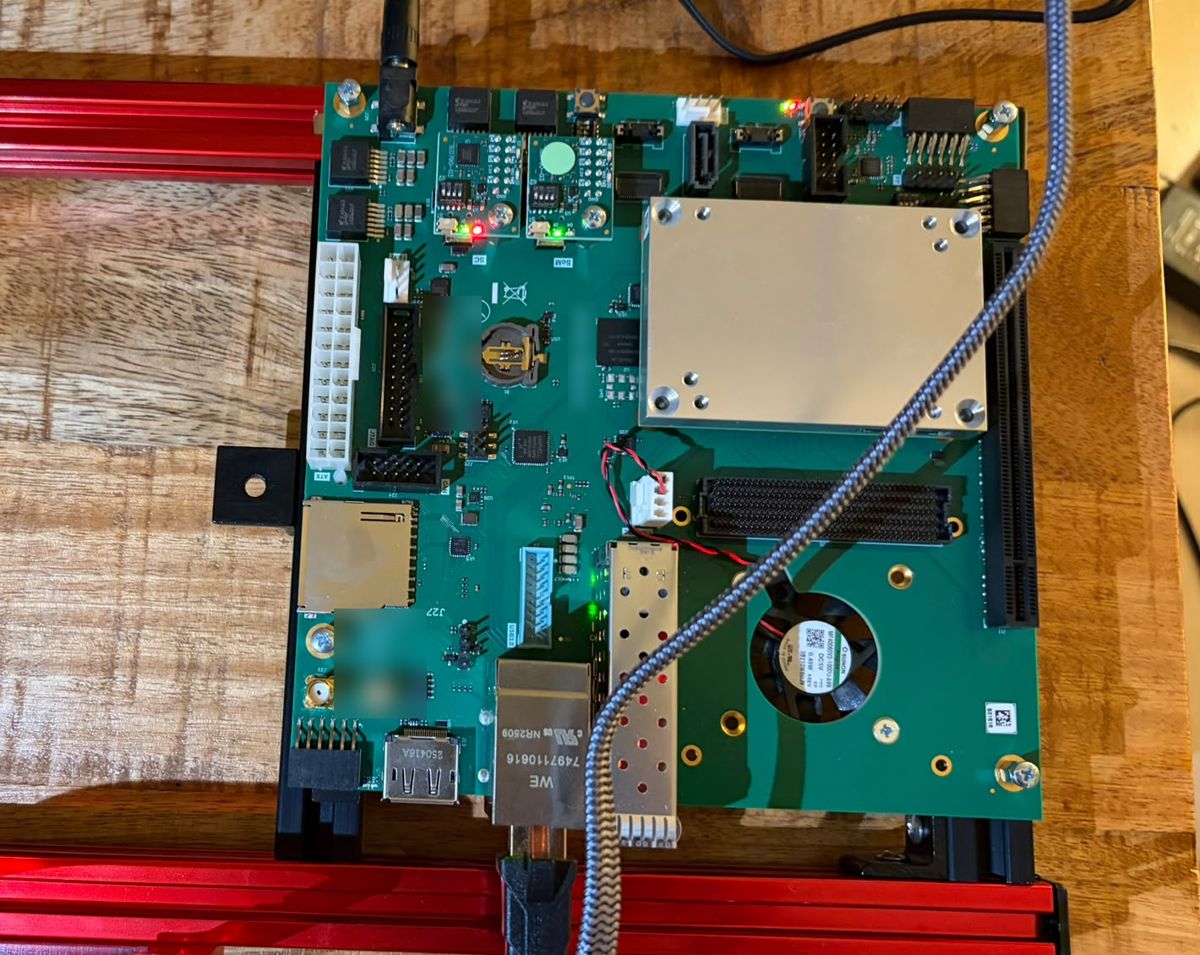
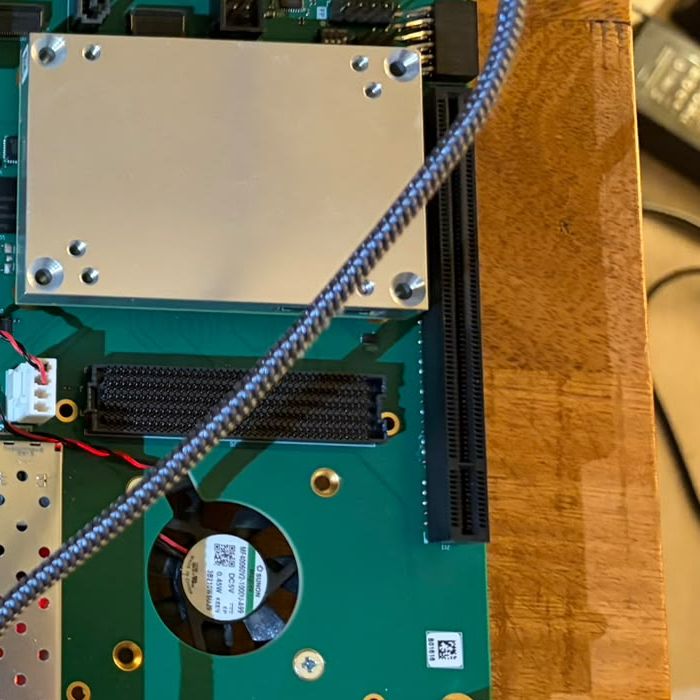
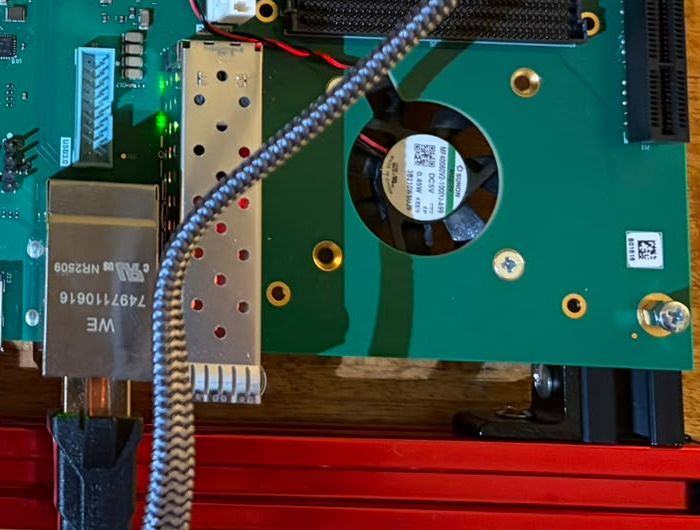
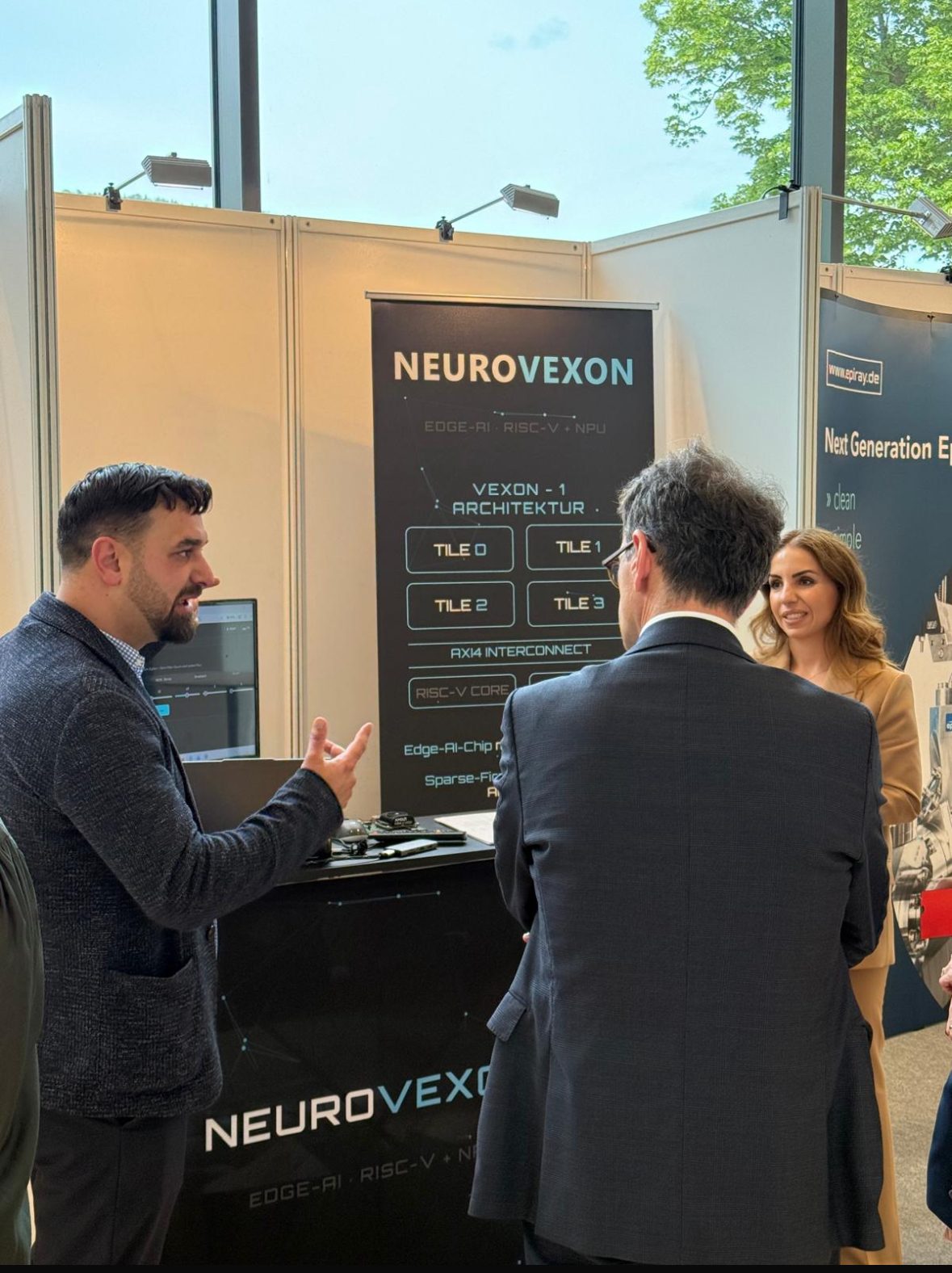
It has been quiet around NeuroVexon for a few weeks — because we were building. Vexon-1 now runs on a second, larger FPGA development platform. And for the first time not as a single NPU core, but as a cluster: several compute tiles in parallel on one FPGA, each bit-exact against our reference model.
On top of that: a compute array twice the size per tile, our own RISC-V control core that turns new operations into firmware instead of hardware changes, and our own Linux image with our own driver stack. All five core innovations are proven in hardware through the real driver path. End to end, the NPU computes a typical matrix multiplication 4.6× faster than all four CPU cores of the same chip combined — realistically two to three times against a hand-optimised library.
Why it matters: anyone deploying or licensing edge AI hardware wants to know whether a design scales — from a small sensor to a production line. Our answer is not a promise. It is a measurement. The next step is silicon.
Update video “From one core to a cluster” (approx. 90 seconds).